
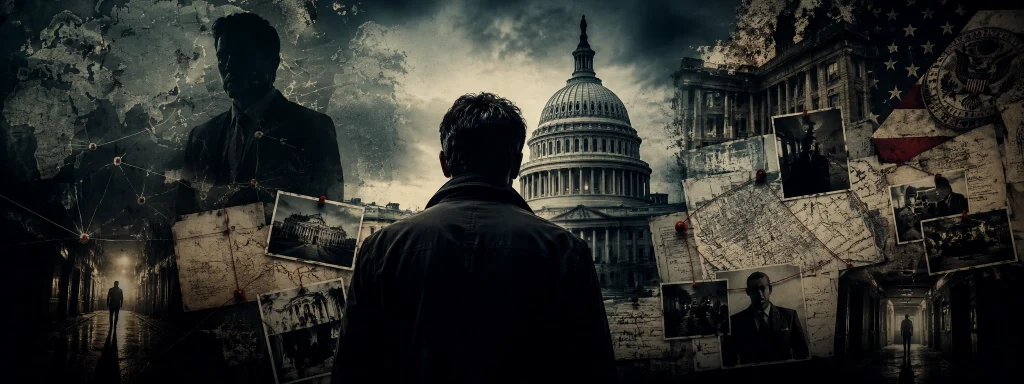
Political thriller stories rarely feel simple. Even when things seem clear, there’s usually something hidden. Sometimes a decision seems too planned, a reaction too measured, or a situation too perfect to be just chance.
This sense of tension usually points to one thing: conspiracy.
In the political thriller genre, conspiracy is more than just a plot device. It gives the story depth. Without it, the story would only cover what’s on the surface. With conspiracy, the plot explores hidden networks, influence, and systems that shape events before anyone notices.
Conspiracy as the Foundation of Political Conflict
Conspiracy in a political thriller story creates the conditions for conflict.
Political systems rely on structure, control, and decisions. When people manipulate these systems in secret, what we see no longer matches what’s really happening. This gap between how things look and how they are creates tension.
In political conspiracy fiction, events are rarely isolated. They are connected through intention. What seems like a coincidence often turns out to be coordinated action shaped by power and influence.
Why Power Needs Secrecy
Power is almost never fully open. The more influence a system has, the more it depends on controlling information.
That’s why secrecy is so important in stories about government conspiracies. Decisions aren’t always made in public. They happen through channels most people can’t access.
In these stories:
- information is filtered
- access is limited
- outcomes are shaped before they are understood
This kind of controlled setting lets conspiracies go unnoticed at first, which makes the story more tense.
Hidden Networks and Unseen Influence
One of the defining traits of conspiracy thriller books is the presence of networks that are not easy to see right away.
These networks aren’t always big or obvious. They can be subtle, working through influence instead of direct control. A choice in one place can affect something elsewhere, even if the link isn’t clear at first.
The idea of hidden networks gives political thrillers their layers. Readers slowly realize that what seemed like a simple chain of events is actually part of something much more complicated.
The Role of Investigation in Exposing Conspiracy
Conspiracy alone doesn’t move the story forward. It’s the act of uncovering it that creates momentum.
In most political thrillers, the investigation shows how deeply things are connected. Characters usually start with little information and often don’t realize they’re facing something bigger.
As more evidence appears, the story changes. What began as a simple question turns into a search through systems, influence, and control.
This connection between investigation and conspiracy is what keeps the genre grounded. The story does not depend on sudden surprises. It grows through discovery.
When Conspiracy Expands the Scale of the Story
A key strength of political conspiracy fiction is how it can shift in scale.
A story that starts locally can quickly connect to national or even global stakes. This growth feels natural because it follows the logic of the conspiracy.
In stories about presidential conspiracies, for example, the stakes are higher. When leadership, national security, and political stability are involved, the urgency increases.
The story goes beyond individual actions and starts to show how whole systems work under pressure.
Control Over Narrative vs. Control Over Reality
Another important aspect of conspiracy in political thriller stories is the difference between controlling information and controlling events.
Sometimes, those in power do not need to change reality. They only need to control how it is presented.
This creates a story with layers, where:
- official versions exist alongside hidden truths
- perception becomes as important as fact
- readers must question what they are being shown
This dynamic adds depth without requiring constant action. The tension comes from interpretation.
Why Conspiracy Keeps Readers Engaged
Readers like conspiracy stories because they challenge what we think we know.
In conspiracy thriller books, nothing feels fully reliable. Every piece of information can lead in multiple directions, and every conclusion can be questioned.
This creates a more active reading experience. The reader is not just following events. They are trying to understand them.
That involvement keeps readers interested, even when the story slows down. The tension comes from thinking, not just action.
A Practical Example of Conspiracy in Motion
In Assassination Attempt! by Robert Workman, the role of conspiracy becomes clearer as the story progresses.
What begins as a focused situation gradually reveals connections that extend beyond the immediate event. The narrative builds through influence, decisions, and relationships that were not visible at the start.
As an emerging voice in political thrillers, Robert Workman uses conspiracy as a structural element rather than a twist. The story grows through layers, allowing the reader to see how hidden forces shape outcomes over time.
Why Conspiracy Remains Essential to the Genre
Without a conspiracy, a political thriller would remain limited to visible conflict. It would lose the depth that comes from questioning systems, motives, and control.
Conspiracy introduces uncertainty, expands scale, and connects individual actions to broader consequences. It allows stories to explore how power actually works, not just how it appears. That is why it remains central to the genre. It is not an addition to the story. It is what gives the story its structure.